




Hormone Blood Test Explained: Understanding Hormone Levels in Your Blood
A clear, patient-friendly guide to understanding what a hormone blood test measures, what oestradiol and FSH levels mean, and how hormone testing supports informed health awareness.
Hormones play a quiet but powerful role in how your body functions every day. From energy and mood to sleep and reproductive health, these chemical messengers influence nearly every system. A hormone blood test offers a straightforward way to measure key hormone levels and understand what is happening inside your body.
In the UK, demand for private hormone testing has grown steadily. More people are choosing to take a proactive approach to their wellbeing. Whether you are curious about changes in your cycle, experiencing unexplained fatigue, or simply want a clearer picture of your health, a hormone blood test UK clinic can provide helpful baseline information.
This guide explains what a hormone blood test involves, how hormone levels are measured, and what key biomarkers such as oestradiol and FSH can indicate. It is written for educational purposes only. It does not replace professional medical advice. If you have concerns about your results, please seek medical advice from appropriate healthcare services.
In This Article
- What Is a Hormone Blood Test?
- How to Check Hormone Levels
- Understanding Oestradiol Levels
- FSH Blood Test and Menopause
- Best Time to Check Hormone Levels for Perimenopause
- Early Signs Hormone Testing May Help Investigate
- What Happens After a Hormone Blood Test?
- Benefits of Private Hormone Blood Testing in London
- Frequently Asked Questions
What Is a Hormone Blood Test?
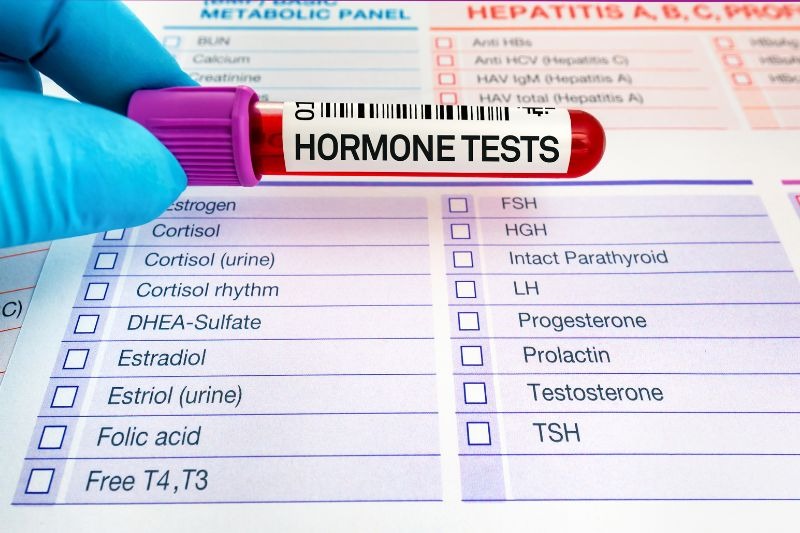
A hormone blood test is a simple blood test that measures the levels of specific hormones circulating in your bloodstream. It is sometimes referred to as a hormone level blood test or hormonal blood tests. The process involves a standard blood draw, usually from a vein in your arm, with samples sent to an accredited laboratory for analysis.
The test can measure a range of hormones depending on the panel selected. Common hormones assessed include oestradiol, follicle-stimulating hormone (FSH), luteinising hormone (LH), progesterone, testosterone, and thyroid hormones. Each hormone provides different information about how your body is functioning.
How Is It Different From General Blood Work?
A standard blood test for hormone levels focuses specifically on hormonal biomarkers. General blood work — such as a full blood count or liver function test — looks at different aspects of health. Blood work for hormone levels zeroes in on your endocrine system, which is the network of glands responsible for producing and regulating hormones.
Many people choose to include hormonal panels as part of a broader health screening. This gives a more complete view of overall wellbeing. Combining standard blood work with a hormone panel can reveal patterns that either test alone might miss.
How to Check Hormone Levels
If you are wondering how to check hormone levels, the process is straightforward. A qualified phlebotomist draws a small blood sample. This sample is then analysed in a laboratory to determine the concentration of specific hormones.
How to Test Estrogen Levels
To understand how to test estrogen levels, a blood sample is taken and the laboratory measures the amount of oestradiol (the primary form of oestrogen) in your serum. This is one of the most commonly requested tests in a female hormone blood test panel. Oestradiol is typically measured in picomoles per litre (pmol/L) in the UK.
FSH and Reproductive Hormones
Follicle-stimulating hormone is another key biomarker often included in hormone testing for women. FSH plays an important role in the menstrual cycle and reproductive function. Measuring FSH alongside oestradiol gives a clearer picture of hormonal balance.
When Might Hormone Testing Be Considered?
Hormone testing for women may be considered at various life stages. Some choose to test as part of routine preventive screening. Others may wish to explore their hormone levels if they notice changes in their menstrual cycle, energy levels, mood, or sleep. An estrogen imbalance test can provide useful baseline data to discuss with a healthcare professional if needed.
Understanding Oestradiol Levels
Oestradiol is the most potent and abundant form of oestrogen produced in the body. It plays a central role in reproductive health, bone density, cardiovascular function, and skin health. Understanding your oestradiol levels can offer meaningful insight into your hormonal wellbeing.
What Are Normal Oestradiol Levels?
Normal oestradiol levels vary significantly depending on several factors. These include your age, the phase of your menstrual cycle, and whether you have reached menopause. The oestradiol normal range in pre-menopausal women typically falls between 70 and 1,200 pmol/L, depending on the cycle phase. After menopause, levels are generally much lower.
A serum oestradiol level is measured through a standard blood draw. Estrogen levels in women fluctuate naturally throughout the menstrual cycle. During the follicular phase, levels gradually rise. They peak just before ovulation and then fluctuate again during the luteal phase. Normal estrogen levels in women will therefore depend on when in the cycle the sample is taken.
| Hormone | What It Indicates | Why It Matters |
|---|---|---|
| Oestradiol (E2) | Primary oestrogen level; reflects ovarian function and cycle phase | Supports bone density, cardiovascular health, and reproductive function |
| FSH | Stimulates follicle development; rises as ovarian reserve declines | Elevated levels may indicate perimenopause or menopause |
| LH | Triggers ovulation; works alongside FSH in the menstrual cycle | Helps assess ovulatory function and cycle regularity |
| Progesterone | Rises after ovulation; supports the luteal phase of the cycle | Low levels may be associated with cycle irregularity or luteal phase changes |
| Testosterone | Present in small amounts in women; supports energy and libido | Elevated levels may warrant further investigation |
Oestradiol levels are a valuable piece of the hormonal picture. They work best when reviewed alongside other markers such as FSH and LH to give a fuller understanding of hormonal health.
FSH Blood Test and Menopause
What Is an FSH Blood Test?
An FSH blood test measures the level of follicle-stimulating hormone in your blood. FSH is produced by the pituitary gland and plays a key role in reproductive function. In women, it stimulates the growth of ovarian follicles each month as part of the menstrual cycle.
FSH Levels and Menopause
As ovarian function naturally declines with age, FSH levels tend to rise. This is because the pituitary gland produces more FSH in an attempt to stimulate the ovaries. Elevated FSH levels menopause is one of the biomarkers that healthcare professionals may consider when assessing menopausal status.
A menopause blood test typically includes FSH alongside oestradiol. Together, these two markers can help build a picture of where someone may be in their hormonal transition. Can a blood test show menopause? While no single test can definitively confirm menopause on its own, consistently elevated FSH levels combined with low oestradiol levels and the absence of menstruation for 12 months are commonly considered indicators.
Understanding Perimenopause Blood Testing
Perimenopause is the transitional phase leading up to menopause. During this time, hormone levels can fluctuate significantly. A perimenopause blood test may show varying FSH and oestradiol levels from one test to the next.
A blood test for perimenopause provides a snapshot of your hormone levels at that moment. Because hormone levels perimenopause can change considerably, some individuals choose to repeat testing over time to observe trends rather than relying on a single result.
Best Time to Check Hormone Levels for Perimenopause
Understanding the best time to check hormone levels for perimenopause can help improve the usefulness of your results. Timing matters because hormone levels naturally fluctuate throughout the menstrual cycle.
Cycle Timing
For women who are still menstruating, hormone blood tests are often recommended during days two to five of the menstrual cycle. This is the early follicular phase, when baseline hormone levels are most stable. Testing at this point provides the most consistent reference values for FSH and oestradiol.
Age Considerations
Perimenopause typically begins in the mid-40s, though it can start earlier for some women. If you are over 40 and noticing changes in your cycle, energy, or mood, hormone testing can provide useful baseline data. Women with a family history of early menopause may also choose to test earlier.
Symptoms Awareness
If you are experiencing symptoms that may be associated with hormonal changes — such as irregular periods, hot flushes, night sweats, or mood fluctuations — testing can offer a clearer picture. Awareness of your hormone levels can help you make informed decisions and have more productive conversations with healthcare professionals.
- Days 2–5 of your cycle — ideal window for baseline FSH and oestradiol
- Morning testing — some hormones are best measured in the morning when levels are most stable
- Repeat testing — a single result is a snapshot; trends over time are more informative
Early Signs Hormone Testing May Help Investigate
Hormonal changes can affect the body in many ways. Some of the signs that people commonly report before choosing to explore hormone testing include:
Cycle Changes
- Irregular periods or changes in flow
- Missed periods or longer gaps between cycles
Energy and Mood
- Persistent fatigue or low energy
- Mood changes or increased irritability
Sleep and Wellbeing
- Disrupted sleep or difficulty staying asleep
- Night sweats or hot flushes
Body Changes
- Unexplained weight changes
- Changes in skin, hair, or overall comfort
These signs can have many causes and are not specific to any single condition. A hormone blood test provides data that can be useful when discussing these changes with appropriate healthcare services. This is educational information only and should not be used to self-diagnose.
What Happens After a Hormone Blood Test?
Once your blood sample has been analysed, you will receive a detailed report showing your hormone levels. Each biomarker will be presented alongside the laboratory reference range, making it easier to see where your results sit.
Understanding Your Report
Your results report will typically include the name of each hormone tested, your measured value, the unit of measurement, and the expected reference range. Results that fall outside the reference range are usually highlighted. It is worth remembering that reference ranges represent typical population values. A result slightly outside the range does not automatically indicate a health concern.
Biomarker Interpretation
Each biomarker in your hormone panel tells part of the story. For example, elevated FSH alongside low oestradiol may suggest declining ovarian function. However, interpreting hormone results requires context — including your age, cycle day, symptoms, and health history. Results should always be reviewed as part of the bigger picture.
When to Seek Medical Advice
If your results fall outside expected ranges or if you have concerns about what your hormone levels may mean, it is important to seek medical advice. A qualified healthcare professional can review your results in the context of your full health history and advise on any next steps. Our clinic provides testing and reporting — for clinical interpretation, we recommend discussing your results with appropriate healthcare services.
Benefits of Private Hormone Blood Testing in London
Private hormone testing offers several practical advantages for those who want to understand their hormonal health without a long wait. At our South Kensington clinic, you can access comprehensive hormone panels with flexible appointment times and prompt results.
- Quick access — no lengthy waiting lists; book at a time that suits you
- Comprehensive panels — choose from targeted hormone tests or broader hormone blood test packages
- Clear reporting — results presented in a detailed, easy-to-understand format
- Professional environment — NMC-registered nursing team in a comfortable clinical setting
- Preventive focus — ideal for those interested in female hormone health screening and proactive wellness
Understanding your hormone levels is an act of self-awareness. It is not about finding problems — it is about gaining knowledge that helps you make informed choices about your wellbeing.
Frequently Asked Questions
What does a hormone blood test show?
A hormone blood test shows the levels of specific hormones in your bloodstream at the time the sample is taken. Depending on the panel, it may measure oestradiol, FSH, LH, progesterone, testosterone, and thyroid hormones. These results provide insight into hormonal balance and can highlight areas that may benefit from further discussion with a healthcare professional.
How to check hormone levels accurately?
For the most accurate results, hormone levels should be tested through a venous blood draw at an accredited clinic. Timing matters — for pre-menopausal women, testing on days two to five of the menstrual cycle provides the most consistent baseline values. Morning appointments may also be preferable for certain hormones.
What are normal oestradiol levels?
Normal oestradiol levels vary depending on age, menstrual cycle phase, and menopausal status. In pre-menopausal women, levels typically range from 70 to 1,200 pmol/L depending on the cycle phase. Post-menopausal oestradiol levels are generally below 100 pmol/L. Your results should always be interpreted in context by a qualified professional.
What does an FSH blood test indicate?
An FSH blood test indicates how much follicle-stimulating hormone is present in your blood. In women, FSH stimulates the growth of ovarian follicles. Rising FSH levels may suggest that the ovaries are becoming less responsive, which can be associated with perimenopause or menopause. FSH is most informative when reviewed alongside other hormonal markers.
Can a blood test show menopause?
A blood test can provide supporting evidence for menopause but cannot confirm it on its own. Consistently elevated FSH levels combined with low oestradiol, alongside the absence of menstruation for 12 months, are commonly considered indicators. A single blood test provides a snapshot, so repeated testing may give a clearer trend.
What is the best time to check hormone levels for perimenopause?
The best time to check hormone levels for perimenopause is during days two to five of your menstrual cycle, known as the early follicular phase. This is when baseline FSH and oestradiol levels are most stable and provide the most useful reference point. If periods have become irregular or have stopped, testing can be done at any time.
Is hormone testing for women accurate?
When conducted through an accredited laboratory using a venous blood sample, hormone testing for women is a reliable method for measuring hormone levels at a given point in time. Accuracy depends on correct sample timing, proper collection, and laboratory quality. It is important to remember that hormone levels fluctuate naturally, so results represent a snapshot rather than a permanent state.
Take an Informed Approach to Your Hormonal Health
Understanding your hormone levels is a positive step towards greater health awareness. Whether you are exploring changes in your cycle, curious about perimenopause, or simply want a clearer picture of your hormonal wellbeing, a hormone blood test provides meaningful, measurable data.
Knowledge empowers better decisions. If you are interested in proactive, preventive hormone testing for women, explore our screening options to find a panel that suits your needs. Your health journey starts with understanding.
Understand Your Hormonal Health Through Preventive Screening
Comprehensive hormone blood testing with clear results and professional reporting, available at our South Kensington clinic.
Related Articles
Disclaimer
This article has been produced for educational and informational purposes only. It does not constitute medical advice, diagnosis, or treatment. Health Screening Clinic is a nurse-led testing and reporting service. We do not provide prescriptions, medical treatment, or GP services. All content is written in accordance with UK medical editorial best practice and is intended to comply with GMC advertising guidance, CQC patient communication standards, and ASA guidelines. If you have concerns about your health, please seek advice from appropriate healthcare services.