







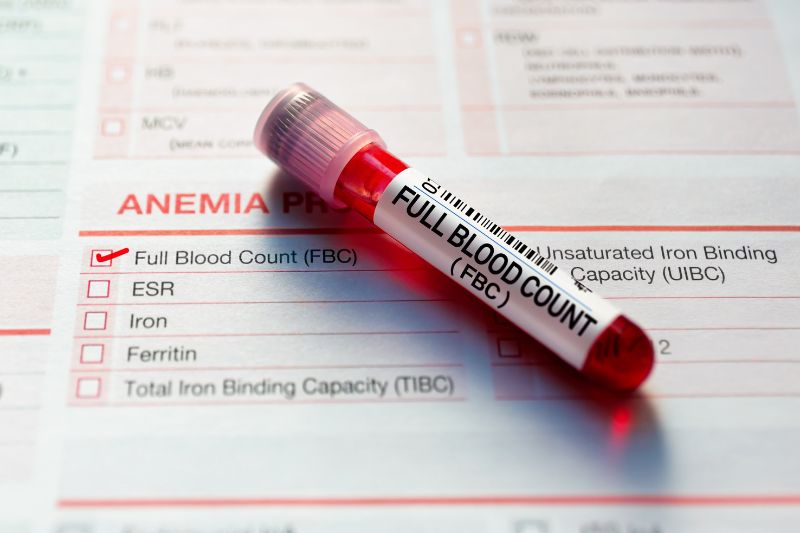
Full Blood Count Test (FBC) – Meaning, Results & What It Shows
A clear, patient-friendly guide to understanding your full blood count results and what this common blood test can reveal about your general health.
Blood tests are one of the most accessible and widely used tools in preventive health. Among all routine blood tests available in the UK, the full blood count is one of the most commonly requested. It offers a broad overview of your general health and can highlight early indicators that may benefit from further attention.
Whether you are booking a blood test for the first time or reviewing results from a recent screening, understanding what a full blood count measures — and what it can show — can help you take a more informed and proactive approach to your wellbeing.
At Private Health Screening Clinic, the full blood count is included as part of our standard blood test panels. This article explains the FBC blood test meaning, what is tested, how to interpret your results at a general level, and why this test matters for ongoing preventive health awareness.
This is an educational article only. It is not intended to provide a medical opinion or replace professional advice. If you have concerns about your blood test results, please seek medical advice.
In This Article
- What Is a Full Blood Count Test?
- What Does a Full Blood Count Test Show?
- What Is Tested in a Full Blood Count?
- Blood Component Comparison Table
- Understanding Full Blood Count Results
- Full Blood Count Abnormal Results
- When Is a Full Blood Count Test Commonly Used?
- Benefits of a Full Blood Count Test
- Frequently Asked Questions
What Is a Full Blood Count Test?
A full blood count test is a routine blood test that measures the key components of your blood. It looks at your red blood cells, white blood cells, platelets, and haemoglobin levels. These measurements provide a general snapshot of your overall health at the time the sample is taken.
The full blood count test meaning is straightforward. It is a quantitative assessment of the cells circulating in your bloodstream. By reviewing the numbers and proportions of each blood component, it is possible to gain useful insight into how well your body is functioning at a basic level.
Full Blood Count vs Complete Blood Count
You may see references to both "full blood count" and "complete blood count." These are the same test. In the UK, the term full blood count (FBC) is standard. In the United States and some other countries, it is referred to as a complete blood count (CBC). A complete blood count (CBC) test explained in simple terms is identical to a full blood count. The markers tested and the purpose of the test are the same regardless of which name is used.
You may also hear this test referred to as a full blood examination. A full blood examination explained in everyday language simply means the same panel of measurements is being carried out on a blood sample to assess general health indicators.
What Does a Full Blood Count Test Show?
So, what does a full blood count test show? At its core, a blood count test shows how the main types of cells in your blood are performing. Each component plays a different role in keeping you healthy, and the levels measured in a full blood count can highlight areas that may need attention.
A complete blood picture test explained in practical terms covers the following: how efficiently your blood carries oxygen, how active your immune system appears, and how well your blood is able to clot. These are broad health indicators rather than specific findings.
What Does a Full Blood Test Include?
A standard full blood count includes measurements for:
- Red blood cell count – the number of cells that carry oxygen around the body
- White blood cell count – the number of cells involved in immune activity
- Haemoglobin – the protein in red blood cells that carries oxygen
- Haematocrit – the proportion of blood made up of red blood cells
- Platelet count – the number of cell fragments that help your blood clot
- Mean cell volume (MCV) – the average size of your red blood cells
What Is Tested in a Full Blood Count?
Understanding what is tested in a full blood count can help you make better sense of your results. Each marker provides a different piece of the overall picture.
Red Blood Cell Count Blood Test
The red blood cell count blood test measures the number of red blood cells in your sample. Red blood cells are responsible for carrying oxygen from your lungs to every tissue and organ in your body. They also help transport carbon dioxide back to the lungs so it can be exhaled.
A red blood cell count that falls outside the expected range may suggest your body is producing too many or too few of these cells. This can be influenced by a range of everyday factors including hydration, altitude, and general lifestyle habits.
White Blood Cell Test in a Full Blood Count
The white blood cell test in a full blood count measures how many white blood cells are present. White blood cells are a key part of the immune system. They help the body respond to infections, inflammation, and other immune challenges.
There are several types of white blood cells, including neutrophils, lymphocytes, monocytes, eosinophils, and basophils. A full blood count may include a differential count, which breaks down the proportion of each type. This can provide additional insight into immune activity at the time of testing.
Platelets
Platelets are small cell fragments that play a vital role in blood clotting. When you cut or injure yourself, platelets gather at the site to help form a clot and stop bleeding. A full blood count measures your platelet count to give a general indication of your blood's clotting ability.
Haemoglobin
Haemoglobin is a protein found inside red blood cells. It binds to oxygen and carries it throughout the body. The haemoglobin level in a full blood count is one of the most commonly reviewed markers because it provides a quick indicator of overall blood health and oxygen-carrying capacity.
Blood Component Comparison Table
The table below provides a simplified overview of the main components measured in a full blood count and what each one shows at a general level.
| Blood Component | What It Shows (General) |
|---|---|
| Red blood cells | Oxygen-carrying capacity |
| White blood cells | Immune activity |
| Platelets | Clotting support |
| Haemoglobin | Overall blood health |
Understanding Full Blood Count Results
Full blood count interpretation is best understood in the context of reference ranges. When you receive your results, each marker will typically be shown alongside a reference range. This range represents the values considered typical for most healthy adults.
Results that fall within the reference range are generally considered within normal limits. Results outside this range — either higher or lower — may warrant further review. However, a single result outside the range does not necessarily indicate a health problem. It simply means the value is worth noting and may benefit from a follow-up test or professional review.
Key Points for Full Blood Count Interpretation
- Results are compared against standard reference ranges
- Reference ranges may vary slightly between laboratories
- One result outside the range is not automatically a cause for concern
- Trends over time can be more informative than a single snapshot
- If results are unclear, seek medical advice for professional guidance
Full Blood Count Abnormal Results
The term "abnormal" can sound worrying, but full blood count abnormal results are more common than many people realise. An abnormal result simply means a value falls outside the expected reference range. It does not automatically mean there is a serious health concern.
Many everyday factors can influence blood test results temporarily. These include:
- Hydration levels – being dehydrated at the time of the test can affect concentration of blood cells
- Recent infections – a cold or minor illness may temporarily raise white blood cell counts
- Exercise – intense physical activity shortly before the test may affect certain values
- Stress – ongoing stress can influence immune-related markers
- Menstruation – menstrual cycles can affect haemoglobin and red blood cell levels in women
- Diet – nutritional intake, including iron and B12, can influence certain markers
If your full blood count results include one or more values outside the reference range, it is sensible to seek medical advice for a clearer understanding. In many cases, a repeat test after a short period can provide reassurance and clarify whether the result reflects a temporary change or something that warrants further review.
When Is a Full Blood Count Test Commonly Used?
A full blood count is one of the most versatile blood tests available. It is used across a wide range of health contexts, including:
- Preventive health screening – as part of a routine wellness check to establish a baseline
- General wellbeing checks – to review overall health when there are no specific concerns
- Monitoring ongoing health – to track changes in blood markers over time
- Pre-travel or occupational health – when a general health overview is required
- Fatigue or low energy – when individuals want to understand whether blood markers may be relevant
The full blood count is often included as part of broader screening panels that also cover liver function, kidney function, thyroid markers, and cholesterol. Together, these tests provide a comprehensive overview of health.
Benefits of a Full Blood Count Test
The full blood count remains one of the most requested blood tests for good reason. It offers several clear benefits for individuals interested in understanding and maintaining their health.
Early Health Insight
Changes in blood markers can appear before physical symptoms, offering early indicators of health trends.
Simple and Widely Used
The full blood count requires only a small blood sample. It is quick, straightforward, and results are typically available within a short timeframe.
Supports Proactive Wellbeing
Regular full blood count testing helps individuals track their health over time and make informed lifestyle decisions.
For individuals who want to stay ahead of potential health changes, including a full blood count as part of a regular screening routine is a practical and accessible step.
Frequently Asked Questions
What is a full blood count test?
A full blood count test is a standard blood test that measures the main components of your blood, including red blood cells, white blood cells, platelets, and haemoglobin. It provides a general overview of your blood health and is one of the most commonly performed blood tests in the UK.
What does a full blood count test show?
A full blood count test shows the levels and proportions of key blood components. It indicates your oxygen-carrying capacity, immune activity, and clotting function. These are broad health indicators that can highlight areas for further review if results fall outside expected ranges.
What is tested in a full blood count?
A full blood count tests red blood cell count, white blood cell count (including a differential breakdown), haemoglobin, haematocrit, platelet count, and mean cell volume (MCV). Each marker provides a different insight into your general health.
What does abnormal full blood count mean?
An abnormal full blood count means that one or more values fall outside the standard reference range. This is quite common and may be caused by temporary factors such as dehydration, a recent infection, stress, or dietary habits. It does not automatically indicate a serious health issue. If results are abnormal, it is advisable to seek medical advice for a professional review.
Is a full blood count the same as a complete blood count?
Yes. A full blood count (FBC) and a complete blood count (CBC) are the same test. "Full blood count" is the standard term used in the UK, while "complete blood count" is more commonly used in the United States. The markers tested and the purpose of the test are identical.
How often should a full blood count be done?
There is no single rule for how often a full blood count should be done. For general preventive health, many individuals choose to include it as part of an annual or biannual health screening. The frequency may vary depending on your personal health goals and any recommendations from appropriate healthcare services.
Can a full blood count detect serious health conditions?
A full blood count can highlight markers that may be associated with a range of health changes. However, it is a general screening tool and is not designed to confirm or rule out specific conditions on its own. If results suggest a need for further investigation, it is important to seek medical advice from appropriate healthcare services.
Do I need to fast before a full blood count test?
In most cases, fasting is not required for a full blood count. However, if your blood test panel includes additional markers such as glucose or cholesterol, fasting may be recommended. It is always best to check the specific preparation requirements before your appointment.
Take a Proactive Approach to Your Health
Understanding your blood test results is an important part of managing your long-term wellbeing. A full blood count provides a valuable baseline that can help you track changes over time and make informed decisions about your lifestyle and health.
If you are interested in learning more about your health through preventive blood testing, explore our health screening packages to find a panel that suits your needs. Knowledge is the first step towards better health awareness.
Understand Your Health Through Preventive Screening
Comprehensive blood testing with clear results and professional review, available at our South Kensington clinic.
Related Articles
Disclaimer
This article has been produced for educational and informational purposes only. It does not constitute medical advice, diagnosis, or treatment. Health Screening Clinic is a nurse-led testing and reporting service. We do not provide prescriptions, medical treatment, or GP services. All content is written in accordance with UK medical editorial best practice and is intended to comply with GMC advertising guidance, CQC patient communication standards, and ASA guidelines. If you have concerns about your health, please seek advice from appropriate healthcare services.