







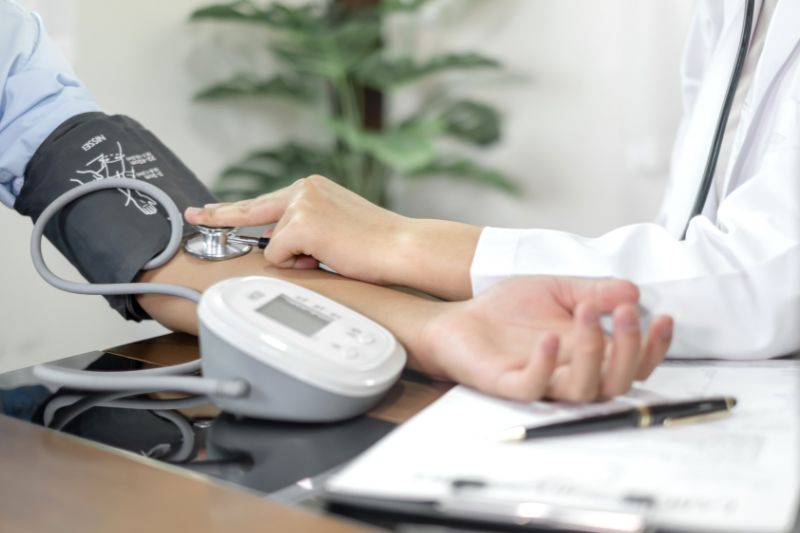
Why Early Detection Is the Future of Healthcare
How early disease detection, preventive healthcare benefits, and proactive health management are reshaping the way we think about long-term wellbeing.
In This Article
- Introduction
- The Shift from Reactive to Proactive Care
- What Is Early Disease Detection?
- How Advanced Diagnostic Screening Works
- AI in Early Diagnosis and Future Technology
- Improving Clinical Outcomes Through Early Detection
- Cost-Effectiveness of Preventive Care
- The Role of Experienced Clinicians and Reporting Standards
- The Future of Healthcare Technology in the UK
- Why Early Detection Matters Now
- Frequently Asked Questions
Healthcare is changing. Across the UK and globally, the conversation is shifting from treating illness to preventing it. At the centre of this shift is early disease detection — the principle that identifying health risks sooner may lead to better-informed decisions and improved long-term wellbeing.
The preventive healthcare benefits of structured screening are now widely recognised. Rather than waiting for symptoms to appear, more people are choosing to measure what is happening inside their bodies today. This approach supports informed awareness and long-term health planning.
The future of healthcare technology is accelerating this trend. From predictive health monitoring tools to AI in early diagnosis, new capabilities are making early disease detection more accessible and more precise than ever before.
This article explores why early disease detection is becoming central to modern healthcare. It examines how proactive health management supports better outcomes at a population level, what technologies are driving change, and why preventive healthcare benefits extend far beyond individual health.
This guide is for educational purposes only. It does not constitute medical advice. If you have health concerns, please seek medical advice from appropriate healthcare services.
The Shift from Reactive to Proactive Care
For decades, healthcare systems have operated on a largely reactive model. You feel unwell. You see a healthcare professional. You receive a diagnosis and treatment. This approach has saved countless lives. But it has a significant limitation — it waits for problems to develop.
The shift from reactive to proactive care represents a fundamental change in thinking. Proactive health management focuses on measuring health markers before symptoms appear. It uses data to identify trends. It supports informed decision-making rather than crisis response.
This shift from reactive to proactive care is not hypothetical. It is already underway. Governments, employers, and individuals are recognising that early disease detection is more effective — and more humane — than late-stage intervention.
The concept of mandatory health assessment importance is gaining traction in workplace and public health policy discussions. While full mandation remains debated, the principle behind it — that structured screening supports better population-level health outcomes — is increasingly accepted. Mandatory health assessment importance is driven by evidence showing that proactive health management reduces demand on acute services over time.
| Aspect | Reactive Care | Proactive Care |
|---|---|---|
| Timing | After symptoms appear | Before symptoms develop |
| Focus | Diagnosis and treatment | Risk identification and awareness |
| Data Usage | Limited to clinical episodes | Continuous biomarker monitoring |
| Cost Pattern | High acute costs | Lower long-term costs |
| Patient Role | Passive recipient | Active participant |
| Goal | Cure or manage illness | Prevent or delay illness |
What Is Early Disease Detection?
Early disease detection is the process of identifying health risks or changes in biomarkers before clinical symptoms emerge. It is built on the principle that many conditions develop silently. By the time you feel unwell, changes may have been underway for months or years.
Blood-based screening is one of the most accessible forms of early disease detection. A single blood draw can measure markers across cardiovascular, metabolic, hepatic, renal, thyroid, hormonal, and immune systems. The data provides insight into how your body is functioning at a biochemical level.
Early cancer detection screening is one of the most discussed areas. Tumour markers such as PSA and CA-125 can be measured through blood testing. While these markers do not diagnose cancer, they may highlight patterns that warrant further investigation. Early cancer detection screening is most valuable when results are tracked over time as part of a structured monitoring programme.
Cardiovascular risk screening is equally important. Lipid profiles, hs-CRP, and other cardiac markers can reveal patterns associated with elevated heart and vascular risk. Cardiovascular risk screening supports early disease detection by identifying changes before they become clinically significant.
Early disease detection does not diagnose. It informs. It provides data that supports better conversations with appropriate healthcare services and better long-term health decisions.
How Advanced Diagnostic Screening Works
Advanced diagnostic screening refers to blood-based testing that goes beyond basic health checks. It measures a broader range of biomarkers, providing deeper insight into how your body is functioning across multiple systems.
The process begins with a blood sample. From that single sample, laboratories can analyse dozens of biomarkers — from cholesterol ratios and blood sugar regulation to liver enzymes, kidney function, thyroid hormones, and inflammation levels. Advanced diagnostic screening turns a routine blood draw into a comprehensive risk profile.
Predictive health monitoring takes this further. By repeating screening at regular intervals, you create a personal health timeline. Each assessment adds data. Over time, patterns emerge — gradual shifts in biomarkers that a single test might miss. Predictive health monitoring transforms screening from a snapshot into a trajectory.
The concept of a next-gen health MOT reflects this evolution. Where traditional health checks measured a handful of markers, a next-gen health MOT may cover 50 to 100 or more biomarkers. It combines breadth with depth, providing data that supports proactive health management rather than reactive response.
Advanced diagnostic screening does not replace medical care. It supports it. The data from screening can be shared with appropriate healthcare services to guide further investigation if needed.
AI in Early Diagnosis and Future Technology
The future of healthcare technology is being shaped by artificial intelligence. AI in early diagnosis is one of the most promising developments in preventive medicine. Machine learning algorithms can analyse vast datasets to identify patterns that human review alone might miss.
AI in early diagnosis works by processing biomarker data alongside population-level health trends. It can flag combinations of markers that, together, may suggest elevated risk. This is not about replacing clinical judgement. It is about supporting it with data-driven insight.
Predictive health monitoring is a natural extension of AI in early diagnosis. As more individuals undergo regular screening, the datasets grow. Larger datasets allow AI models to become more refined, improving the precision of risk profiling over time.
The future of healthcare technology also includes wearable health devices, digital health records, and integrated screening platforms. These technologies are making early disease detection more accessible. They are removing barriers. And they are putting more health data into the hands of individuals.
It is important to note that AI in early diagnosis is a rapidly evolving field. Current capabilities are impressive but not infallible. Technology should always be seen as a tool that supports — not replaces — informed clinical processes and individual decision-making.
Improving Clinical Outcomes Through Early Detection
At a population level, evidence supports the value of improving clinical outcomes through early detection. When health risks are identified earlier, the options for management and intervention tend to be broader, less invasive, and more effective.
Research across multiple health systems has shown high clinical success in early intervention for conditions such as cardiovascular disease, type 2 diabetes, and certain cancers. When biomarker changes are identified before symptoms develop, the window for action is wider. This does not guarantee outcomes. But it supports a more favourable statistical trajectory.
Life expectancy and preventive care are closely linked. Studies suggest that populations with access to structured preventive screening tend to experience better health outcomes over time. Life expectancy and preventive care reflect a simple principle — the earlier a risk is identified, the more options exist for addressing it.
Minimising discomfort with early treatment is another recognised advantage at a population level. Conditions identified early often require less intensive intervention. Minimising discomfort with early treatment is not about avoiding healthcare. It is about ensuring that when intervention is needed, it is timely and proportionate.
Improving clinical outcomes through early detection is not a guarantee for any individual. It is a population-level trend supported by evidence. Early disease detection contributes to this trend by providing the data that makes earlier awareness possible.
Cost-Effectiveness of Preventive Care
The cost-effectiveness of preventive care is one of the strongest arguments for early disease detection. Healthcare systems globally are under financial pressure. Reactive care — treating conditions after they have progressed — is expensive. Emergency admissions, late-stage treatments, and long-term disease management represent significant costs.
Reducing long-term healthcare costs through preventive screening is not a theoretical concept. It is supported by health economic research. When conditions are identified earlier, the cost of management is typically lower. Fewer emergency interventions. Shorter hospital stays. Less complex treatment pathways.
The cost-effectiveness of preventive care applies at both system and individual levels. For healthcare systems, it reduces pressure on acute services. For individuals, it reduces the likelihood of costly late-stage interventions. Reducing long-term healthcare costs is a shared benefit.
Advanced diagnostic screening represents an accessible route into preventive care. Private screening programmes offer structured, comprehensive blood-based testing at transparent price points. This makes proactive health management available to those who choose to invest in their long-term wellbeing.
Preventive healthcare benefits extend beyond clinical outcomes. They include economic advantages that ripple through healthcare systems, workplaces, and individual financial planning.
The Role of Experienced Clinicians and Reporting Standards
Early disease detection is only as valuable as the accuracy of the data it produces. This is where the role of an experienced clinician for early diagnosis becomes important. Structured screening requires trained phlebotomists for sample collection, accredited laboratories for analysis, and clear reporting standards for results interpretation.
An experienced clinician for early diagnosis ensures that the screening process follows established clinical governance. Samples are handled correctly. Laboratory standards are maintained. Results are compiled into reports that explain each biomarker in context rather than presenting raw data without explanation.
It is important to clarify that screening clinics provide testing and reporting. They do not provide diagnosis, treatment, or prescriptions. If results indicate areas of potential concern, the recommended step is always to seek medical advice from appropriate healthcare services.
About our screening approach — quality, governance, and transparency are central to meaningful early disease detection. Without them, screening data loses its reliability and its value.
The Future of Healthcare Technology in the UK
The future of healthcare technology in the UK is moving firmly towards prevention. Digital health records, predictive analytics, and integrated screening platforms are making proactive health management more practical and more accessible.
Predictive health monitoring tools are becoming more sophisticated. They can track biomarker trends over time, identify emerging patterns, and provide personalised risk profiles. As these tools mature, early disease detection will become more precise and more widely available.
Executive and workplace health programmes are also expanding. Employers are recognising the preventive healthcare benefits of structured screening for their workforce. These programmes support proactive health management at scale, reducing absenteeism and supporting employee wellbeing.
The future of healthcare technology is not about replacing human care with machines. It is about using technology to extend the reach, precision, and accessibility of preventive screening. A next-gen health MOT that combines comprehensive blood-based testing with predictive analytics represents where healthcare is heading.
Comprehensive screening packages already reflect this direction. They provide structured, data-rich assessments that support long-term health monitoring. As the future of healthcare technology continues to evolve, these programmes will become even more refined and more personalised.
Why Early Detection Matters Now
Early disease detection is not a future aspiration. It is a present reality. The tools exist. The data is available. The shift from reactive to proactive care is underway. What remains is personal choice — the decision to engage with preventive screening and take an active role in your own long-term wellbeing.
The preventive healthcare benefits of early disease detection are clear. Earlier awareness supports better decisions. Better decisions support better outcomes. And better outcomes — at both individual and population level — represent a healthcare system that works more effectively for everyone.
Proactive health management is not about anxiety. It is about information. It is about replacing uncertainty with data and replacing assumptions with evidence. Early disease detection gives you the foundation for that approach.
Whether you are considering your first screening or making preventive assessment a regular part of your routine, the most important step is simply to start. Early disease detection works best as a habit — a sustained commitment to knowing where your health stands and making informed decisions accordingly.
Frequently Asked Questions
What is early disease detection?
Early disease detection is the process of identifying changes in health biomarkers before clinical symptoms appear. It uses blood-based testing to measure markers across cardiovascular, metabolic, hormonal, and other bodily systems. The goal is informed awareness, not diagnosis. Results may highlight patterns worth discussing with appropriate healthcare services.
Why are preventive healthcare benefits important?
Preventive healthcare benefits are important because they support early risk identification, long-term health monitoring, and informed decision-making. At a population level, preventive screening is associated with improved health outcomes, reduced acute care demand, and lower long-term healthcare costs. For individuals, it provides data that supports better conversations with healthcare professionals.
How does AI support early diagnosis?
AI in early diagnosis works by analysing biomarker data alongside population-level health trends. Machine learning algorithms can identify combinations of markers that may suggest elevated risk. AI supports — but does not replace — clinical judgement. It is a tool that enhances the precision and accessibility of predictive health monitoring.
What is proactive health management?
Proactive health management is an approach that focuses on measuring health markers before symptoms develop. It uses structured screening, trend tracking, and risk profiling to support informed decisions about long-term wellbeing. It represents a shift from reactive to proactive care — from treating illness to preventing it.
Is preventive care cost-effective in the UK?
Yes, health economic research supports the cost-effectiveness of preventive care. When conditions are identified earlier, the cost of management is typically lower. Fewer emergency interventions, shorter hospital stays, and less complex treatment pathways all contribute to reducing long-term healthcare costs at both system and individual levels.
What is the future of healthcare technology?
The future of healthcare technology is moving towards prevention-led, data-driven care. Digital health records, predictive analytics, AI-supported screening, and integrated health platforms are making early disease detection more accessible and more precise. The direction is clear — healthcare is becoming more proactive, more personalised, and more preventive.
How does early cancer detection screening work?
Early cancer detection screening through blood testing measures tumour markers such as PSA and CA-125. These markers do not diagnose cancer. They identify elevated levels that may warrant further investigation. When tracked over time, changes in these markers may highlight patterns worth discussing with appropriate healthcare services.
Start with Awareness
Early disease detection is not about predicting the future. It is about understanding the present. It gives you measurable, evidence-based insight into where your health stands today. And that understanding is the foundation for every informed health decision you make going forward.
Preventive healthcare benefits are not abstract. They are personal. They belong to every individual who chooses to engage with their own wellbeing proactively. Whether you are thirty or sixty, the best time to start is now. The data is there. The tools exist. The choice is yours.
Related Articles
Disclaimer
This article has been produced for educational and informational purposes only. It does not constitute medical advice, diagnosis, or treatment. Health Screening Clinic is a nurse-led testing and reporting service. We do not provide prescriptions, medical treatment, or GP services. All content is written in accordance with UK medical editorial best practice and is intended to comply with GMC advertising guidance, CQC patient communication standards, and ASA guidelines. If you have concerns about your health, please seek advice from appropriate healthcare services.
Disclaimer
This article is for educational and informational purposes only and does not constitute medical advice. Health Screening Clinic provides testing and reporting services only. Always consult a qualified healthcare professional for personal medical guidance.