







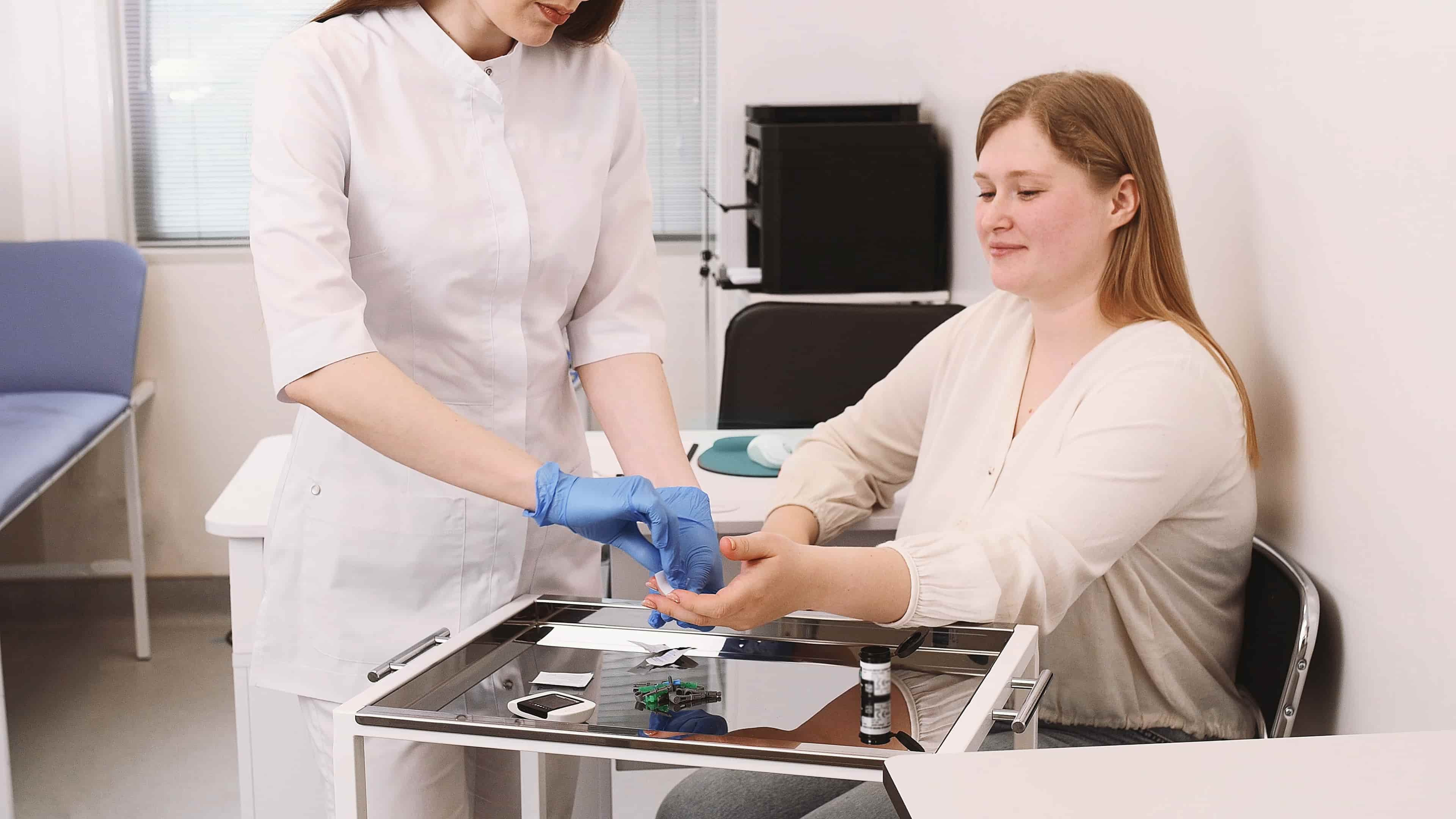
How Can Women Prepare Questions Before Fertility Testing?
Discover how women can prepare the right questions before fertility blood testing in the UK. Learn which biomarkers matter, what results may indicate, and how to feel confident and informed.
Knowing how to prepare questions before fertility testing can make a real difference to how informed and empowered you feel throughout the process. Whether you are beginning to explore your reproductive health, planning for the future, or simply seeking clarity, approaching fertility blood testing with the right questions helps you better understand your results and next steps. This guide is designed to support women across the UK — including those in London and surrounding areas — in approaching their fertility screening appointments with confidence.
What Is Fertility Blood Testing? A Clear Definition
Fertility blood testing is a form of blood screening that measures key reproductive hormones and related biomarkers to provide a snapshot of a woman’s current hormonal and ovarian health status. It does not diagnose infertility, nor does it predict future outcomes with certainty. Instead, it provides information that can help inform further conversations with appropriate healthcare professionals.
Results from fertility blood tests may indicate how the body is functioning hormonally at the time of testing, and can sometimes highlight areas that warrant further investigation.
Please note: at Health Screening Clinic, our Female Hormonal Health Screening includes LH, FSH, oestradiol, prolactin, testosterone, SHBG and the Free Androgen Index. It is not a full fertility assessment: AMH and progesterone are not offered, and thyroid function is included in our Full Body MOT packages rather than this screening. Further fertility investigation is arranged through your GP or a fertility specialist.
Key Biomarkers Typically Measured in Fertility Blood Tests
Understanding the biomarkers involved helps you form better questions before your appointment. Below is a summary of the most commonly tested hormones:
| Biomarker | What It May Indicate | When Tested |
|---|---|---|
| AMH (Anti-Müllerian Hormone) | Ovarian reserve; can suggest the quantity of remaining eggs | Any time in the menstrual cycle |
| FSH (Follicle-Stimulating Hormone) | Ovarian function; elevated levels may suggest declining reserve | Day 2–5 of cycle |
| LH (Luteinising Hormone) | Ovulation signalling; ratio with FSH can be informative | Day 2–5 of cycle |
| Oestradiol (E2) | Supports FSH interpretation; reflects follicular activity | Day 2–5 of cycle |
| Prolactin | Elevated levels may sometimes be associated with cycle irregularities | Any time (ideally morning) |
| Progesterone | May suggest whether ovulation has occurred | Day 21 of a 28-day cycle |
| Thyroid Function (TSH/T4) | Thyroid health can impact menstrual and reproductive function | Any time |
Of the biomarkers above, our Female Hormonal Health Screening includes FSH, LH, oestradiol and prolactin. AMH and progesterone are not offered at our clinic, and thyroid function (TSH and free T4) is included in our Full Body MOT packages rather than this screening.
Practical Insight: Knowing which biomarkers will be measured allows you to ask specific, focused questions — such as when in your cycle the test should ideally be taken, and what the reference ranges mean for your age group.* If AMH is on your list, our guide to AMH and ovarian reserve explains what it measures.
Why Preparing Questions Before Fertility Testing Matters
Many women arrive at fertility screening appointments feeling uncertain about what to ask. This is entirely understandable — reproductive health involves complex science, and the emotional dimension adds another layer. However, preparing thoughtful questions in advance helps you:
- Maximise the value of your screening appointment
- Understand the context of your results, not just the numbers
- Avoid misinterpretation of what results do and do not mean
- Identify follow-up steps with appropriate healthcare services
- Feel more in control of your health journey
For women in London and across the UK, private health screening clinics — such as nurse-led services — can offer an accessible, supportive environment for hormone blood testing with flexible appointment availability.
Essential Questions to Prepare Before Your Fertility Blood Test
Questions About the Testing Process
- Which specific tests will be included in my fertility screen?
- Does the timing of my menstrual cycle affect when I should be tested? (Learn why results vary across cycles.)
- Do I need to fast beforehand, or are there any preparation requirements?
- How long will it take to receive my results report?
- Will a nurse be available to walk me through my results?
Questions About Your Results
- What do my AMH levels suggest about my ovarian reserve relative to my age?
- If any results fall outside the standard reference range, what does that typically indicate?
- How do these results relate to each other — for example, FSH alongside oestradiol?
- Can results vary between different testing cycles, and should I retest?
- What are the limitations of these results — what do they not tell me?
Questions About Next Steps
- If I have concerns about my results, who would be the appropriate healthcare professional to see?
- Are there lifestyle factors that may influence these hormone levels?
- How frequently should I consider repeat testing?
Practical Insight: Writing your questions down before the appointment — and grouping them by theme — can help you feel less overwhelmed in the moment.
Who Should Consider Fertility Blood Testing?
Fertility hormone screening may be worth exploring if you:
- Are aged 25–45 and want a baseline understanding of your reproductive hormones
- Have irregular or absent menstrual cycles and want informational insight
- Are planning to start a family in the near or medium-term future
- Are considering egg freezing and wish to understand your ovarian reserve first
- Have a family history of early menopause or hormonal conditions
- Simply want proactive awareness of your hormonal health as part of a wider wellness approach
You do not need to be experiencing any symptoms to find fertility blood screening useful. Many women choose to test as part of informed, preventive health planning. For a closer look, read about fertility markers by age.
How Often Should Fertility Blood Testing Be Considered?
| Situation | Suggested Frequency |
|---|---|
| Baseline health check, no concerns | Annually or as part of a wider health screen |
| Monitoring known hormonal changes | Every 6–12 months (guided by a healthcare professional) |
| Approaching mid-30s and planning for family | Consider a one-off baseline, then as advised |
| Post-investigation follow-up | As recommended by your healthcare provider |
Frequency decisions should always be made in consultation with an appropriate healthcare professional. Our clinic provides testing and results reporting only — we do not offer treatment or prescriptions.
Understanding Your Results: What the Numbers May Suggest
Receiving a fertility blood test result can feel daunting, particularly if any values fall outside the standard reference range. It is important to understand that:
- Reference ranges are population averages — they provide context, not certainty
- A single result is one data point — it reflects your hormonal status on that day
- Results may vary depending on cycle timing, stress levels, illness, or sleep
- AMH, in particular, can be subject to laboratory variation and should always be interpreted alongside other clinical information
If your results suggest anything outside the normal range, we would always encourage you to share these with an appropriate healthcare professional who can assess your individual situation fully. Our article on why fertility results need context explains how to approach that conversation.
Practical Insight: Fertility blood test results are most meaningful when reviewed in context — your age, cycle regularity, lifestyle, and overall health all form part of a wider picture that no single number can capture alone.
Fertility Testing in London: Accessible Private Screening
For women based in London, private nurse-led hormone blood testing offers a discreet and professional option alongside NHS care. At Health Screening Clinic, our qualified nursing team provides blood testing and detailed results reporting in a comfortable, professional setting through our female hormonal health screening.
We offer testing and reporting only — we do not prescribe, treat, or diagnose. Our role is to provide you with clear, accessible health information so you can make informed decisions in partnership with appropriate healthcare services.
Frequently Asked Questions: Preparing for Fertility Blood Testing
1. What is the most important question to ask before fertility blood testing?
Ask which specific hormones will be tested and whether the timing of your menstrual cycle affects when the test should ideally be taken. Cycle timing is particularly relevant for FSH, LH, and oestradiol, which are typically most informative on days 2–5 of your cycle.
2. Do I need to prepare differently for different fertility blood tests?
Yes, preparation can vary. Some tests — such as progesterone — are cycle-dependent, while AMH can be measured at any point. It is always worth confirming preparation requirements with your clinic in advance so that results can be interpreted accurately.
3. Can fertility blood testing tell me if I am infertile?
No. Fertility blood testing provides an informational snapshot of your hormone levels and ovarian reserve. It may suggest areas for further investigation, but it cannot diagnose infertility or predict fertility outcomes with certainty.
4. How long does it take to receive fertility blood test results?
Turnaround times vary by clinic and test type, so please confirm the expected timeframe when booking. You will receive a written report that you can discuss with an appropriate healthcare professional.
5. Is fertility blood testing available without a GP referral in the UK?
Yes. In the UK, women can access fertility blood testing directly through private health screening clinics without a GP referral. This can be particularly useful for those seeking timely, proactive health information.
6. What should I do if my fertility blood test results are outside the normal range?
If any results fall outside the standard reference range, we recommend sharing your report with an appropriate healthcare professional — such as a gynaecologist or specialist — who can assess your results within the full context of your health history.
7. How does AMH testing differ from other fertility hormone tests?
AMH (Anti-Müllerian Hormone) is unique because it can be tested at any point in the menstrual cycle. It is often used as an indicator of ovarian reserve — the quantity of eggs remaining — and is one of the most widely used biomarkers in fertility screening, although it is not currently offered at our clinic.
8. Can stress or lifestyle affect my fertility blood test results?
Yes. Factors such as stress, illness, significant weight changes, sleep disruption, and certain medications may influence hormone levels at the time of testing. This is one reason why results are always best interpreted as part of a broader health picture.
9. At what age should women start thinking about fertility blood testing?
There is no single correct age. Many women choose to test in their late 20s to early 30s to establish a baseline understanding of their ovarian reserve, particularly if they are considering delaying pregnancy. Others test in their mid-30s as part of proactive planning.
10. What is the difference between NHS and private fertility blood testing?
NHS fertility testing is typically offered as part of a clinical investigation pathway and may involve waiting times. Private testing — available through clinics such as ours — may offer more flexible appointment times and a detailed written report, though it does not include treatment or prescription services, and our hormonal screening does not include AMH or progesterone.
A Final Word: Taking a Proactive Approach to Your Reproductive Health
Preparing thoughtful questions before fertility blood testing is a helpful step for your health. Understanding what is being tested, what results may suggest, and what steps to consider next places you in a stronger position — regardless of what your results show.
At Health Screening Clinic, our nurse-led team is here to provide thorough, professional blood testing and clear results reporting, supporting your health awareness journey every step of the way.
Ready to take the next step? You can book your appointment at a time that suits you. Knowledge is one of the most valuable tools you have.